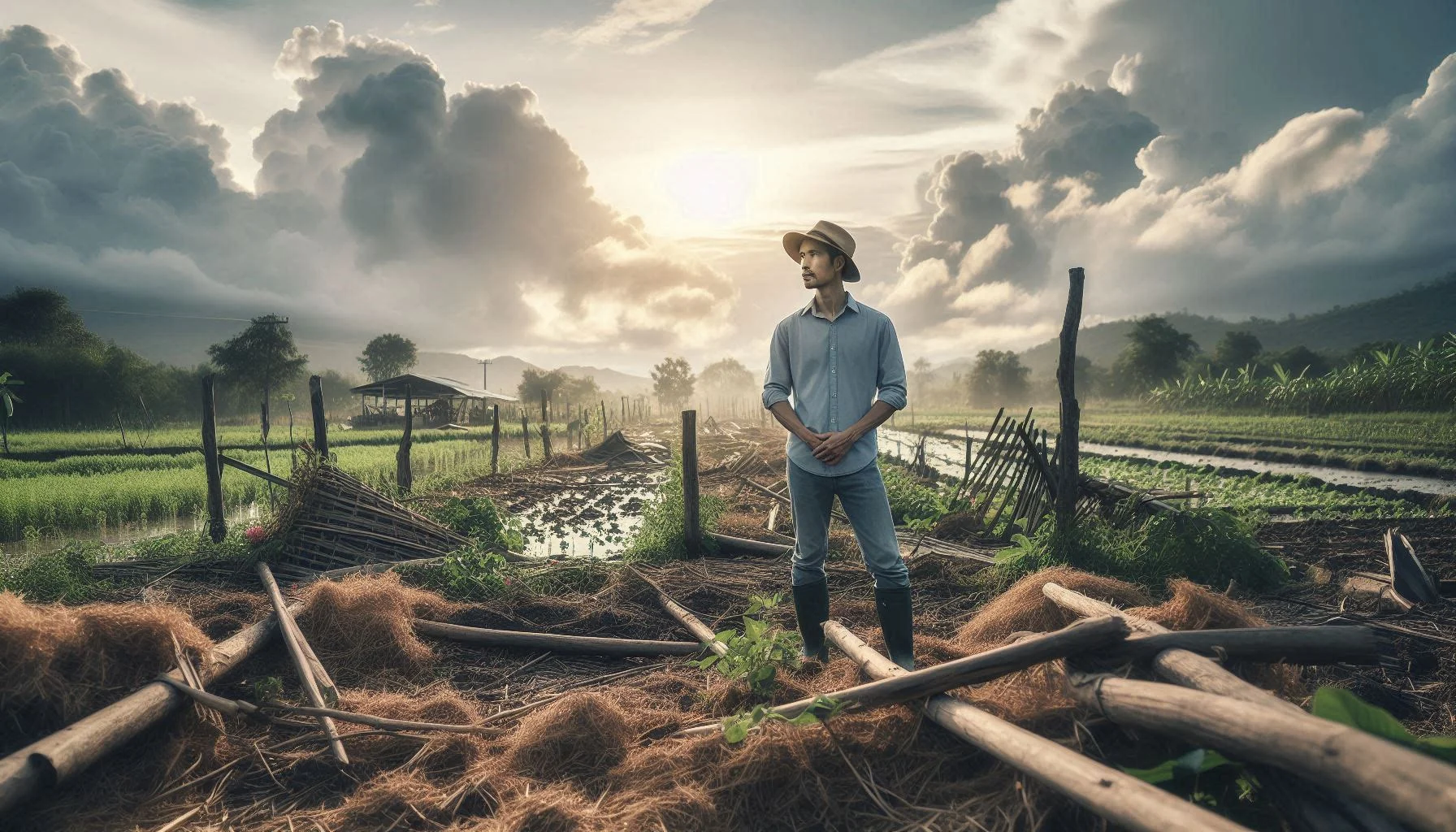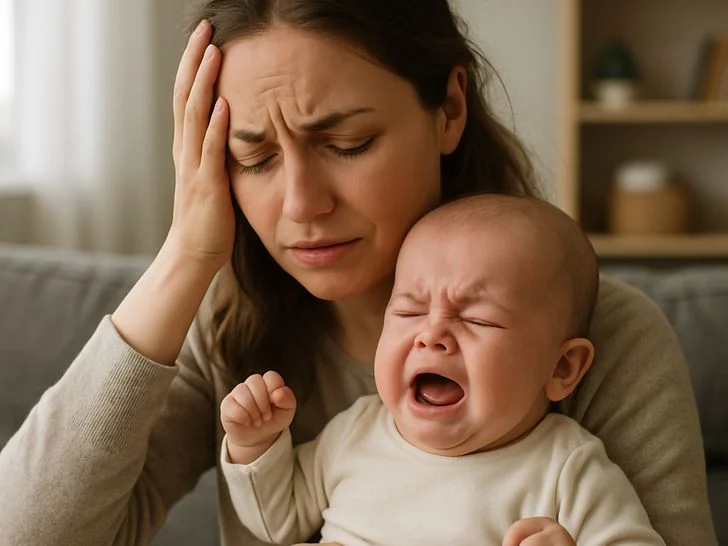


Climate Shocks Displace Childhood in ways that statistics alone cannot capture. When cyclones strike, homes collapse but so do school routines, protection systems, healthcare access, and the invisible architecture that keeps children safe.
Across Africa, South Asia, and the Pacific, extreme weather events are no longer isolated disasters. Climate Shocks Displace Childhood are structural shocks that are reshaping childhood itself.
And cyclones are revealing something critical: child vulnerability during climate disasters is not accidental. It is patterned, predictable, and policy driven.
1. When Cyclones Hit, Children Lose More Than Shelter

In countries like Madagascar, repeated cyclones such as Batsirai and Emnati have displaced hundreds of thousands. But displacement does not only mean relocation. It means:
- Interrupted education
- Malnutrition risks
- Family separation
- Increased exposure to exploitation
- Trauma without psychological support
When classrooms become shelters and hospitals flood, childhood protection systems collapse.
Similarly, in Mozambique, cyclones Idai and Kenneth devastated entire provinces. Months later, children were still out of school, and many never returned.
Climate shocks do not pause childhood. They permanently alter it.
2. The Geography of Vulnerability Is Not Random
Cyclones disproportionately affect:
- Coastal communities
- Informal settlements
- Regions with weak infrastructure
- Areas already experiencing poverty
In Malawi and Zimbabwe, Cyclone Freddy exposed how fragile housing, poor drainage systems, and under-resourced public services magnify risk for children.
Globally, similar patterns appear in Bangladesh and Philippines where children in climate-prone zones face repeated displacement cycles before reaching adolescence.
Climate risk maps often measure wind speed and rainfall. They rarely measure child protection fragility.
That is the blind spot.
3. Education Is the First Casualty and the Hardest to Recover
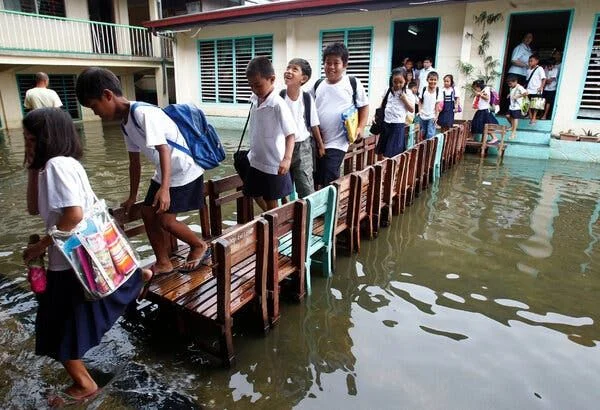
When Climate Shocks Displace Childhood, schooling becomes unstable.
Temporary shelters double as classrooms. Teachers are displaced. Learning materials are destroyed.
Research across sub-Saharan Africa shows that prolonged school disruption increases:
- Early marriage rates
- Child labor
- Long-term income loss
- Intergenerational poverty
When climate systems fail repeatedly, Climate Shocks Displace Childhood in ways that permanently alter learning pathways and long-term opportunity.
Once a child drops out after a cyclone, return rates are significantly lower for girls.
This is not just climate vulnerability. It is structural inequality amplified by disaster.
4. Child Protection Systems Are Not Designed for Climate Frequency
Humanitarian response models were built for occasional crises.
But cyclones are becoming seasonal realities.
In Madagascar, multiple cyclones within a single season have overwhelmed local response systems. Child protection officers, social workers, and health staff are stretched thin.
Globally, frameworks led by agencies like UNICEF and the United Nations Office for Disaster Risk Reduction advocate for child-centered climate resilience, yet implementation gaps remain wide.
We are responding to 21st-century climate patterns with 20th-century protection models.
5. Displacement Increases Invisible Risks
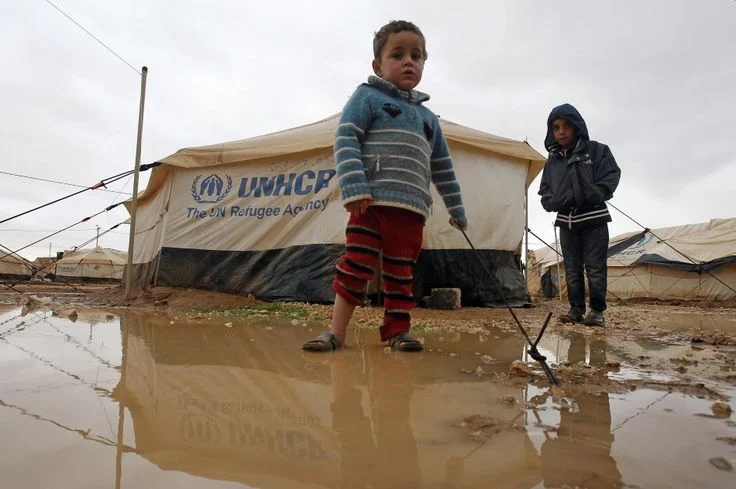
In temporary camps and informal settlements, children face:
- Increased gender-based violence
- Trafficking risks
- Psychological distress
- Loss of identity documentation
When a birth certificate washes away, access to services becomes complicated.
In regions of the Horn of Africa and Southern Africa, displacement is no longer temporary. It becomes cyclical migration.
Childhood becomes unstable by default.
6. Climate Shocks Reveal Governance Gaps
Cyclones do not create inequality they expose it.
Why are evacuation systems weaker in low-income communities?
Why are schools not climate-resilient?
Why is child mental health rarely integrated into disaster planning?
The vulnerability of children during cyclones is deeply tied to:
- Urban planning failures
- Infrastructure inequality
- Underinvestment in public services
- Weak social protection systems
Climate is the trigger. Governance is the multiplier. The reality is simple: when preparedness is weak, Climate Shocks Displace Childhood faster and more severely.
7. The Global Policy Shift Must Be Child-Centered
Climate financing conversations often prioritize carbon, infrastructure, and adaptation technology.
But where is the child lens?
A truly resilient system must include:
- Climate-proof schools
- Portable education systems
- Child-specific emergency cash transfers
- Mental health integration
- Data systems that track child displacement longitudinally
If Climate Shocks Displace Childhood today, policy must prevent permanent damage tomorrow.
This is where social research becomes essential.
Without child-centered data, we design adult-centered solutions.
Why This Matters Globally
From the Caribbean to Southeast Asia, from Southern Africa to the Pacific Islands cyclones are increasing in intensity and frequency.
Climate change is not just an environmental issue. It is redefining the experience of childhood in vulnerable regions.
And unless global institutions, governments, and development partners shift toward integrated child-resilience systems, we risk normalizing disrupted childhoods. Across continents, Climate Shocks Displace Childhood with increasing frequency, and the global policy architecture is struggling to keep pace.
That is not adaptation. That is abandonment.
The Research Imperative
At Insight and Social, we believe child vulnerability during climate shocks must be measured beyond headline displacement numbers.
We need to understand:
- Long-term educational trajectories
- Gendered impacts of displacement
- Child mental health outcomes
- Community resilience behaviors
- Institutional response gaps
Data must move from reactive reporting to anticipatory policy design.
If climate shocks are structural, then research must be structural too.
Insight and Social is a global social research company committed to evidence-driven policy insight across climate resilience, child protection, governance, and humanitarian response.
We partner with multilateral agencies, NGOs, and development actors to generate rigorous, context-sensitive research that informs child-centered climate solutions.
If your organization is working at the intersection of climate and child vulnerability, let’s collaborate.
Because when Climate Shocks Displace Childhood, evidence must shape response.